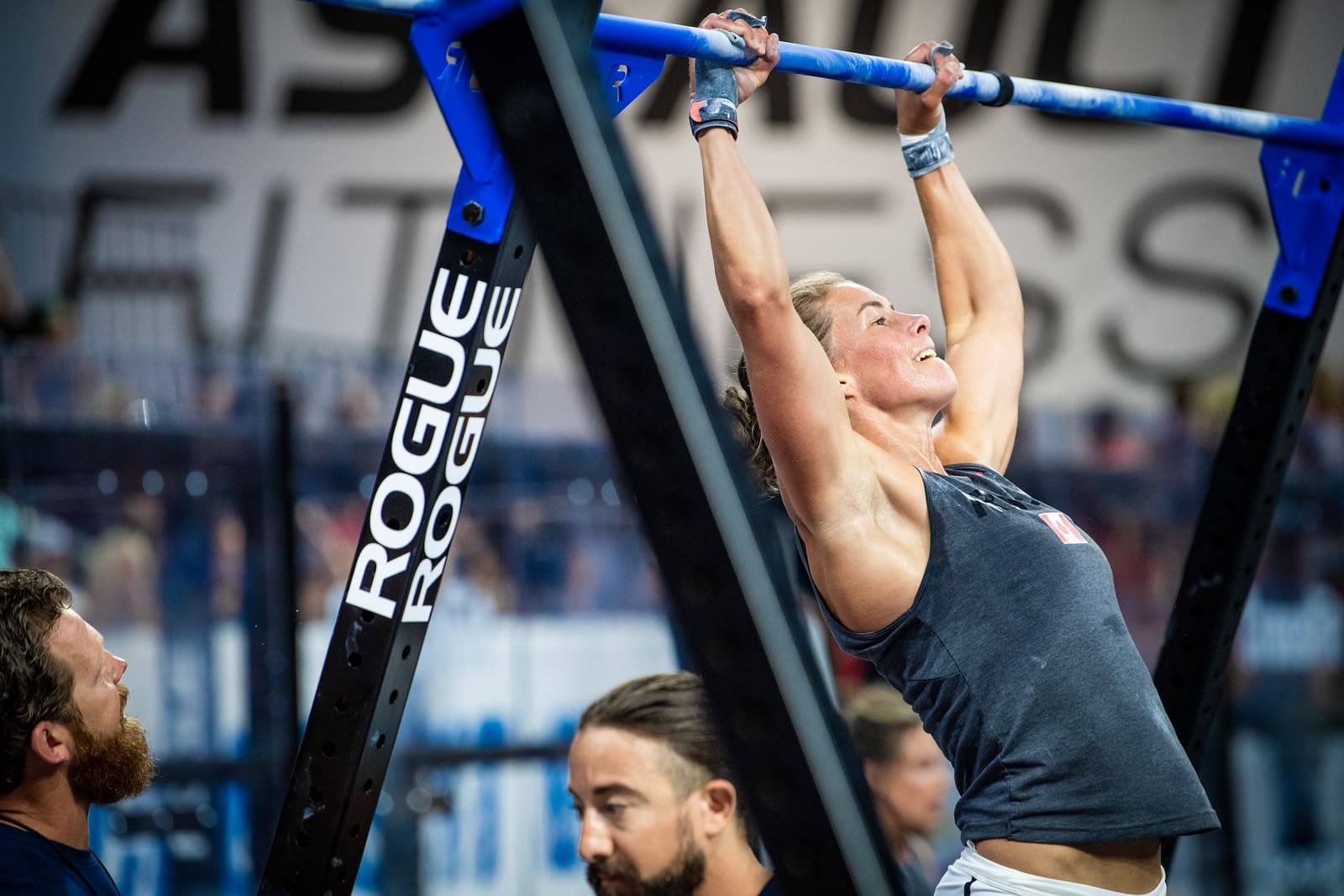


Pull-ups are one of the simplest ways to measure upper body strength, yet they remain one of the hardest exercises for most people to master. Unlike many gym movements, you cannot hide behind heavy machines or momentum. Every repetition requires you to lift your own body through a full range of motion using your back, arms, shoulders, and core.
That is exactly why pull-ups have become a benchmark of real world strength. Military organizations, firefighters, athletes, and fitness professionals have relied on them for decades to assess relative strength rather than simply measuring how much weight someone can move.


The surprising reality is that most people who go to the gym cannot perform many strict pull-ups. Some cannot complete even one. Others can do several, but very few can reach the numbers considered excellent for their age and sex.
So how many pull-ups should you be able to do? More importantly, what does science say about what your score means for your strength, health, and fitness?
Why Pull-Ups Are So Challenging
A pull-up looks simple. You hang from a bar and pull your chin above it. In reality, the exercise demands coordination between multiple muscle groups while moving your entire bodyweight.
The primary muscles involved include the latissimus dorsi, biceps brachii, trapezius, rhomboids, posterior deltoids, forearm flexors, and the muscles of the core. Electromyography research consistently shows that pull-ups produce high activation of the latissimus dorsi and biceps while also challenging stabilizing muscles throughout the shoulder complex.
Is The Spoto Press the Perfect Chest Exercise for Jacked Pecs?
Unlike machine exercises that isolate muscles, pull-ups require the nervous system to coordinate many muscles simultaneously. This makes them an effective measure of functional upper body strength.
Body composition also plays a major role. Since you are lifting your own bodyweight, carrying additional body fat increases the amount of weight that must be moved without contributing to force production. Two people with identical muscular strength may have very different pull-up performances simply because one weighs significantly less.
How Many Pull-Ups Can Most People Actually Do?
Fitness testing data consistently shows that pull-up performance varies dramatically across the population.
Among healthy but untrained adults, completing one or two strict pull-ups is already difficult for many individuals, especially women and older adults. Regular gym attendance does not necessarily improve pull-up ability because many people prioritize machines, isolation exercises, or bench pressing instead of vertical pulling movements.

For healthy young men who train recreationally, completing between five and ten strict pull-ups is generally considered a solid level of strength. For healthy young women, performing two to five strict repetitions demonstrates good relative upper body strength because women typically possess less upper body muscle mass and greater essential body fat than men.
Athletes in sports such as climbing, gymnastics, CrossFit, wrestling, calisthenics, and obstacle course racing often exceed fifteen or even twenty consecutive pull-ups because their training specifically develops high levels of relative strength.
The key point is that gym membership alone does not predict pull-up performance. Relative strength matters much more than absolute strength.
Pull-Up Standards for Men
Although different organizations publish slightly different standards, recreational fitness norms are remarkably consistent. A man who cannot perform one strict pull-up should not feel discouraged because this is common among beginners.
- Completing between one and four repetitions indicates a basic level of upper body strength.
- Reaching five to ten repetitions generally reflects above average recreational fitness.
- Performing eleven to fifteen strict pull-ups demonstrates excellent relative strength.
- Anyone capable of twenty or more strict repetitions belongs to a relatively small group of highly trained individuals.
- Elite military candidates, competitive climbers, and advanced calisthenics athletes often perform more than twenty repetitions while maintaining strict technique.
Pull-Up Standards for Women
Women face a greater challenge because of physiological differences in muscle distribution and body composition. This does not mean women cannot become exceptional at pull-ups. Elite female climbers and gymnasts regularly perform high repetition sets.
For recreational fitness, completing one strict pull-up already represents an important milestone.
- Two to five repetitions indicate good upper body strength.
- Six to ten repetitions are considered excellent.
- More than ten consecutive strict pull-ups place most women among highly trained athletes.
These standards highlight why achieving even a few strict repetitions deserves recognition.
Technique Matters More Than Numbers
Many people overestimate their pull-up performance because they count partial repetitions. A strict pull-up begins from a dead hang with the elbows fully extended. The body remains under control throughout the movement without excessive swinging or kicking. The repetition ends only when the chin clearly passes above the bar before lowering back to full elbow extension.
Shortening the range of motion makes the exercise easier but reduces muscle activation and makes comparisons meaningless.
Research comparing different pulling techniques has shown that movement variations significantly influence muscle recruitment, emphasizing the importance of consistent form during testing and training.
What Makes Someone Good at Pull-Ups?
Several physical qualities determine pull-up performance. Relative strength is the biggest factor. Increasing strength without increasing body mass improves performance. Conversely, gaining bodyweight without increasing strength usually makes pull-ups harder.
Grip strength also plays a surprisingly important role. If your forearms fatigue before your back muscles, your total repetitions will suffer. Studies have found strong relationships between grip strength and overall physical function, athletic performance, and upper body strength.
Shoulder stability is another important factor. The rotator cuff and scapular stabilizers help control the movement while reducing injury risk.
Core strength also contributes because excessive swinging wastes energy and reduces force transfer between the upper and lower body.
Finally, training specificity cannot be ignored. People who regularly perform pull-ups become more efficient at them through neurological adaptations as well as muscular development.
Are Pull-Ups a Good Indicator of Overall Fitness?
Pull-ups primarily measure relative upper body strength, but they also provide insight into overall fitness. Research consistently links muscular strength with lower risks of cardiovascular disease, metabolic disease, functional decline, and premature mortality. While pull-up performance itself does not directly predict lifespan, individuals with higher muscular strength generally experience better long term health outcomes.
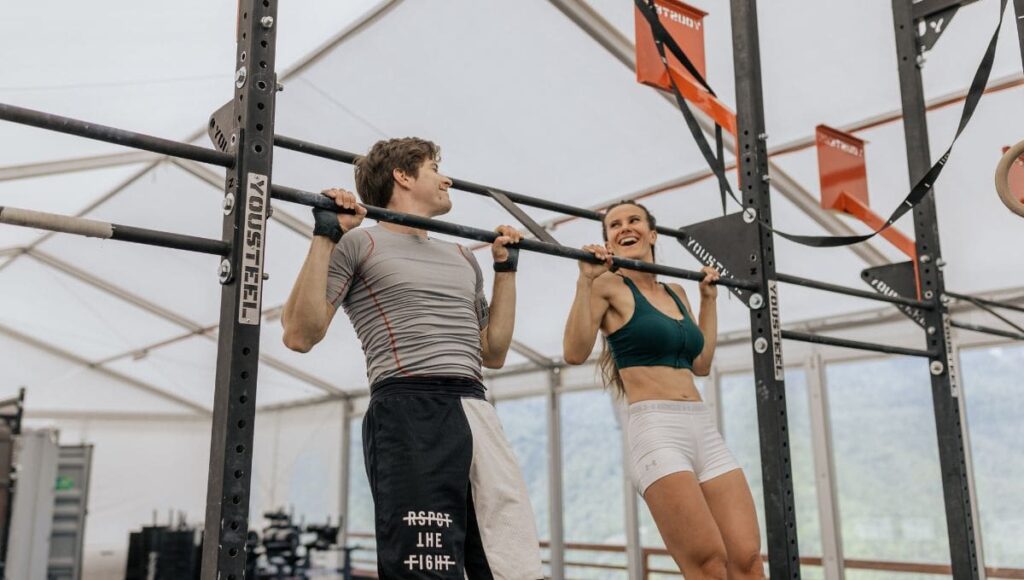
One well known study involving firefighters found that greater pull-up performance was associated with lower injury risk during physically demanding occupational tasks. Stronger upper bodies improve the ability to climb, lift, carry, and stabilize loads during daily activities and sports.
That said, pull-ups should not be viewed as a complete fitness test. They tell you little about cardiovascular endurance, lower body strength, flexibility, or mobility.
A person capable of twenty pull-ups may still have poor aerobic fitness, while an elite marathon runner may struggle with pull-ups because their training emphasizes different physical qualities.
Why Some Strong Lifters Struggle With Pull-Ups
It may seem strange that someone who can bench press over 300 pounds struggles to complete ten pull-ups.
The explanation lies in the difference between absolute and relative strength. Absolute strength refers to the total force you can produce regardless of bodyweight. Relative strength compares strength to body mass.
Powerlifters often possess exceptional absolute strength but also carry greater body mass, making bodyweight exercises more demanding. Conversely, climbers frequently weigh much less while developing extraordinary pulling strength relative to their bodyweight. This is why pull-ups remain one of the best measures of functional upper body performance.
How to Improve Your Pull-Up Score
Improving pull-ups requires consistent practice rather than random effort. Progressive overload remains the foundation of improvement. Beginners often start with assisted pull-ups using resistance bands or assisted pull-up machines before gradually reducing assistance over time.
Eccentric training has particularly strong scientific support. Lowering yourself slowly from the top position develops strength throughout the movement and often allows beginners to achieve their first unassisted repetition faster.
Horizontal rowing exercises strengthen many of the same muscles while reducing the overall load. Grip training can also improve endurance, especially for individuals whose forearms fatigue early. Reducing excess body fat may significantly improve performance because every pound lost reduces the amount of weight lifted during every repetition.
Training frequency matters as well. Studies suggest that performing pull-ups multiple times per week produces better strength improvements than training the movement only occasionally, provided recovery is adequate.
Should You Compare Yourself to Others?
Pull-up standards can be motivating, but they should not become a source of frustration. Age, sex, bodyweight, training history, injury history, and genetics all influence performance.
Someone who loses twenty pounds while maintaining strength may dramatically improve their pull-up score without adding any muscle. Another person may gain muscle mass for bodybuilding purposes and temporarily perform fewer repetitions despite becoming objectively stronger.
The most valuable comparison is against your previous performance. If you could not perform one pull-up six months ago but can now complete five strict repetitions, your progress is significant regardless of how anyone else performs.
The Bottom Line
Pull-ups remain one of the most honest tests of upper body strength because they require you to move your own body through space with control.
Most recreational gym goers are unable to perform high numbers of strict pull-ups. For men, completing five to ten repetitions represents solid relative strength, while more than ten is excellent. For women, even one strict repetition is a meaningful achievement, with two to five representing good performance and six or more indicating outstanding strength.
The good news is that pull-up ability responds well to consistent training. Strength improvements, better technique, increased grip endurance, and healthier body composition can all contribute to better performance over time.
Whether your current score is zero or twenty, the pull-up offers a clear and measurable challenge that rewards patience, smart programming, and consistent effort.
Key Takeaways
| Topic | Key Insight |
|---|---|
| Why pull-ups matter | They measure relative upper body strength by requiring you to lift your own bodyweight. |
| Average performance | Most recreational gym goers perform fewer pull-ups than they expect, and many beginners cannot complete one strict repetition. |
| Good standard for men | Five to ten strict pull-ups generally reflects solid recreational fitness, while more than ten is considered excellent. |
| Good standard for women | One strict pull-up is a major milestone, while two to five indicates good strength and six or more is excellent. |
| Biggest performance factor | Relative strength, not absolute strength, is the strongest predictor of pull-up performance. |
| Best ways to improve | Assisted pull-ups, eccentric training, rowing exercises, grip training, and consistent practice produce the best results. |
| Technique | Every repetition should begin from a dead hang and finish with the chin clearly above the bar. |
| Health relevance | Muscular strength is associated with better long term health outcomes, although pull-ups alone do not measure total fitness. |
References
- Andersen, V., Fimland, M.S., Brennset, O., Haslestad, L.R., Lundteigen, M.S., Skalleberg, K., Saeterbakken, A.H., 2014. Muscle activation and strength in different pull up variations. Journal of Strength and Conditioning Research, 28(4), pp.1074 to 1081.
- Bohannon, R.W., 2019. Grip strength: An indispensable biomarker for older adults. Clinical Interventions in Aging, 14, pp.1681 to 1691.
- Harman, E., Gutekunst, D., Frykman, P., Nindl, B., Alemany, J., Mello, R. and Sharp, M., 2008. Prediction of simulated battlefield physical performance from field expedient tests. Military Medicine, 173(1), pp.36 to 41.
- Lesinski, M., Prieske, O., Granacher, U., 2016. Effects and dose response relationships of resistance training on physical performance in youth athletes. British Journal of Sports Medicine, 50(13), pp.781 to 795.
- Lusk, S.J., Hale, B.D. and Russell, D.M., 2010. Grip width and forearm orientation effects on muscle activity during the lat pull down. Journal of Strength and Conditioning Research, 24(7), pp.1895 to 1900.
- Ruiz, J.R., Sui, X., Lobelo, F., Morrow, J.R., Jackson, A.W., Sjöström, M. and Blair, S.N., 2008. Association between muscular strength and mortality in men. British Medical Journal, 337, a439.
- Schoenfeld, B.J., Ogborn, D. and Krieger, J.W., 2017. Strength and hypertrophy adaptations between low load and high load resistance training. Journal of Strength and Conditioning Research, 31(12), pp.3508 to 3523.
- Vigotsky, A.D., Halperin, I., Lehman, G.J., Trajano, G.S. and Vieira, T.M., 2017. Interpreting signal amplitudes in surface electromyography studies in sport and rehabilitation sciences. Frontiers in Physiology, 8, 985.