Building muscle, improving health and staying functional in everyday life does not require an endless list of exercises. In a recent YouTube video, sport scientist Dr. Milo Wolf breaks down five core movement categories he believes should form the foundation of most gym programs.
Rather than focusing on five specific exercises, Wolf argues that these movement patterns provide the most value for your time in the gym, covering large amounts of muscle while also supporting strength and everyday function.


1. Horizontal Pushing
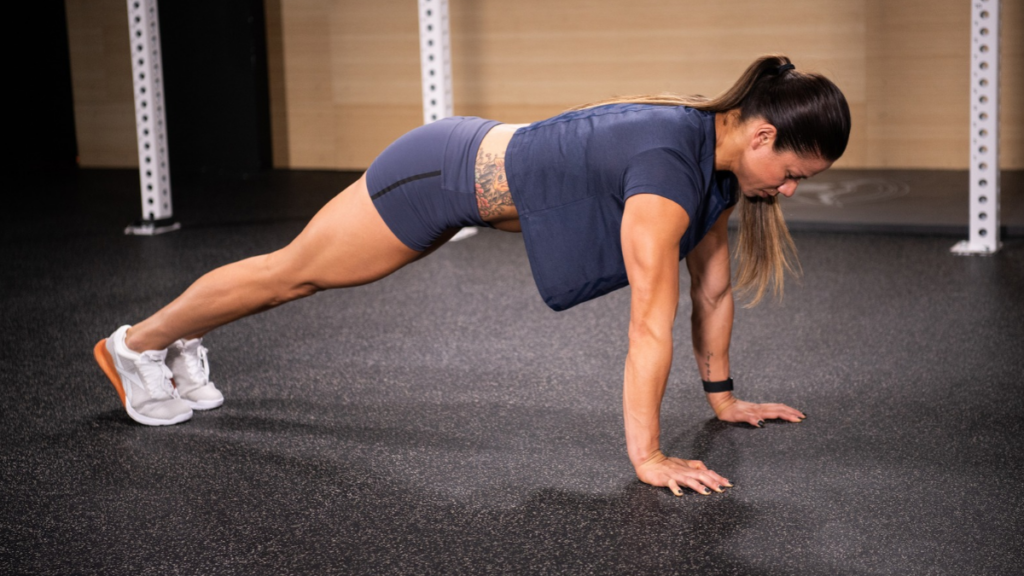
The first category is horizontal pushing, which includes deficit push-ups, dips, bench press and incline press.
These movements train the chest, triceps and front delts while allowing you to cover several muscle groups with one exercise. Wolf points out that compound movements are particularly useful for people who have limited time to train.
“A wide range of exercises can help if they’re actually the same movement pattern.”
A deficit push-up is one option, but the important factor is incorporating some form of horizontal pressing into your program.
2. Vertical Pulling
Next is vertical pulling, including pull-ups and lat pulldowns.
According to Wolf, vertical pulling trains the biceps, lats and teres major while also contributing significantly to the V-taper of the physique. He also references research suggesting that vertical pulling can produce similar biceps growth to direct curls.
For those looking to develop their back while training efficiently, this movement category offers plenty of value.
3. Horizontal Pulling
The third category is horizontal pulling, with exercises such as chest-supported T-bar rows and dumbbell bent-over rows.
Rows can train a large portion of the back, including the mid traps, lower traps, rhomboids and lats. Wolf also notes that rowing movements can have practical carryover to everyday activities.
However, if maximizing biceps growth is the priority, he says curls or vertical pulling may be more effective than rows.
4. Hip Hinge
Wolf considers the hip hinge the second most important movement category. Romanian deadlifts and good mornings are his preferred examples.
Hip hinges train the glutes, hamstrings, adductors and lower back while teaching a fundamental movement pattern used when lifting objects from the ground.
For hypertrophy, Wolf favors movements such as RDLs because they allow the hamstrings to lengthen under load.
5. Squat Pattern
At the top of Wolf’s list is the squat pattern.
Squats, lunges and similar movements combine knee and hip extension to train the quads, glutes and adductors. Beyond muscle growth, Wolf highlights their importance for everyday function, particularly maintaining the ability to stand up and move effectively as you age.
He also points to research suggesting that squat training can contribute to cardiorespiratory fitness, particularly when performed with challenging volume.
The Five Core Movements for a Simpler Program
Wolf’s main message is that effective training does not have to be complicated. By including horizontal pushing, vertical pulling, horizontal pulling, hip hinging and squat patterns, lifters can train a large portion of their musculature while spending less time in the gym.
For particularly busy days, he suggests choosing just three movement patterns and performing a few sets of each.
About the Author
Jeremiah Oliva

Jeremiah Oliva is a writer passionate about fitness, sports, and active living. He has experience in songwriting and managing content and social media for online radio and magazine platforms.
He covers HYROX, CrossFit®, and competitive fitness, with a focus on performance, mindset, and athlete development.
Outside of writing, Jeremiah trains in boxing, cycles, explores the outdoors with his kids, and plays the guitar.