The ring muscle up has a reputation. It looks elite, feels intimidating, and is often treated like a skill reserved for the strongest athletes in the gym. But that reputation hides an important truth. The ring muscle up is not magic. It is a combination of strength, technique, and timing that can be trained and developed step by step.
If you can hang from the rings, pull your body upward, and support yourself above them, you already have the building blocks. What matters is how you connect those pieces.


Reason 1: The Ring Muscle Up Is a Trainable Combination of Strength Qualities
Understanding the Movement
A ring muscle up is not a single movement. It is a sequence of three distinct phases:
- The pull phase
- The transition phase
- The dip phase
Each of these phases relies on specific strength qualities that can be trained independently.
From a biomechanical perspective, the muscle up combines vertical pulling and pushing with a transition that shifts the shoulder from extension into flexion while maintaining stability. This is not fundamentally different from other compound movements. It is just more complex.

Research on resistance training shows that complex movements can be broken into smaller components and trained individually for improved performance. This principle is widely used in strength and conditioning and applies directly to the muscle up.
You Do Not Need “Superhuman” Strength
One of the biggest misconceptions is that you need extreme pulling strength to achieve your first muscle up. In reality, the required strength is well within reach for most trained individuals.
Studies on bodyweight training show that relative strength, which is strength in relation to body mass, is the key predictor of performance in gymnastic movements. This means you do not need to be massive or lift huge absolute loads. You need efficient strength relative to your own body.
For most athletes, the following benchmarks are sufficient to begin working seriously toward a muscle up:
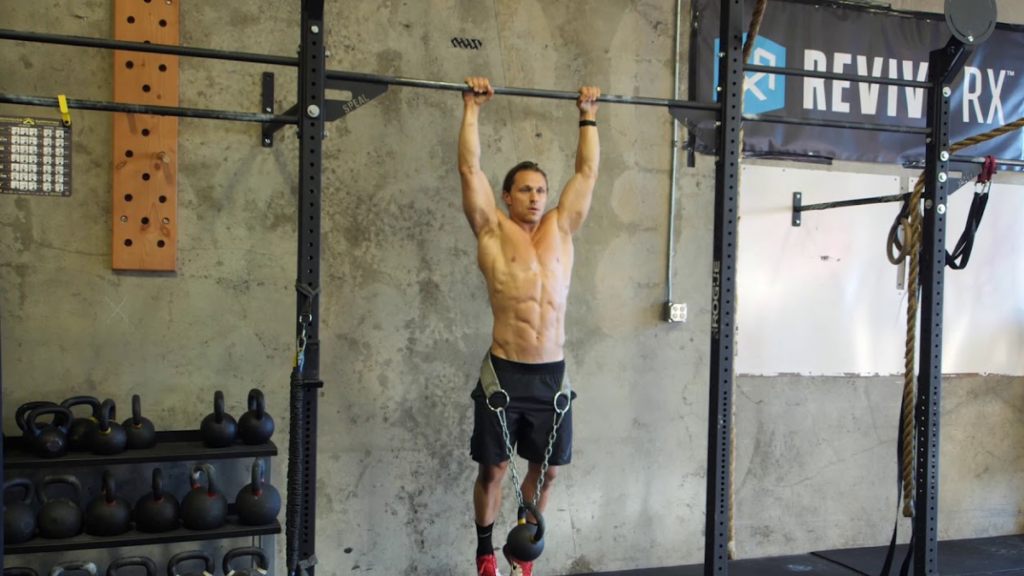
- 8 to 12 strict pull ups
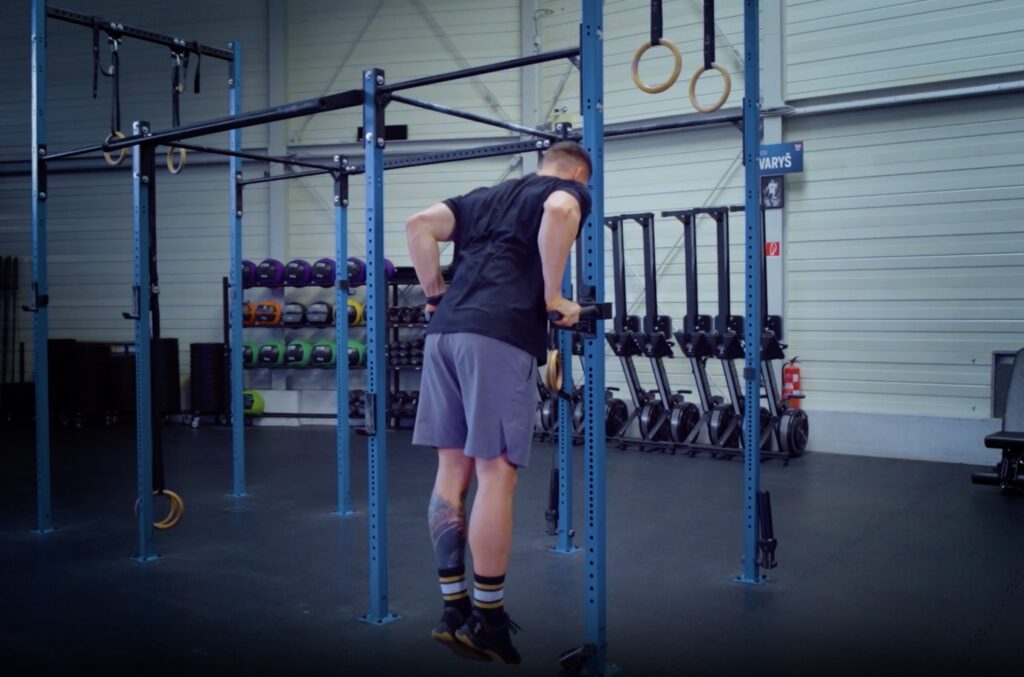
- 5 to 8 deep ring dips
- 20 to 30 second ring support hold
These numbers are not extreme. They are achievable with structured training.
Strength Adaptation Happens Predictably
Strength development follows well established physiological principles. Progressive overload leads to increases in muscle cross sectional area and neural efficiency.
Research shows that resistance training improves motor unit recruitment, firing frequency, and coordination. These adaptations directly improve your ability to generate force during pulling and pushing movements.
For the muscle up, this means:
- Stronger lats and upper back improve the pull
- Stronger chest and triceps improve the dip
- Improved neural coordination helps link the phases together
Specific Strength for Rings
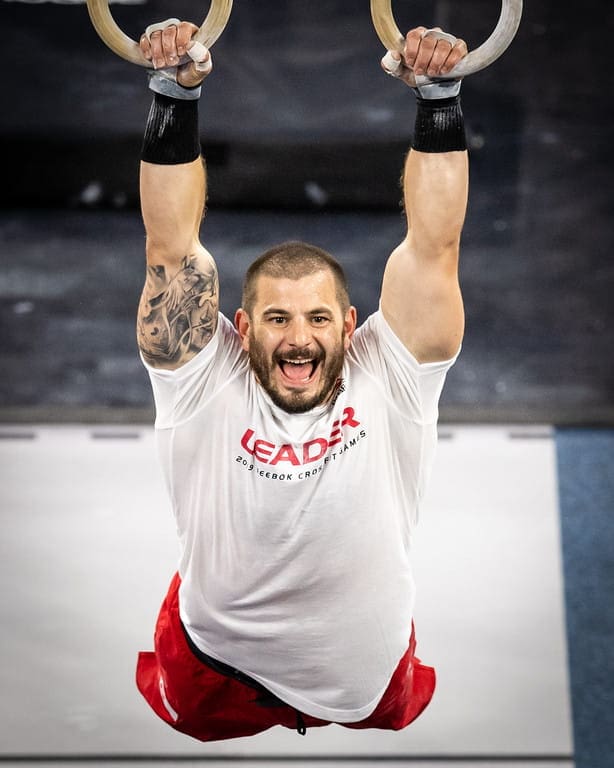
Rings introduce instability, which increases the demand on stabilizing muscles. This might seem like a disadvantage, but it is actually a powerful training tool.
Unstable training environments have been shown to increase activation of stabilizer muscles, especially around the shoulder joint. This leads to improved joint control and resilience.
For the muscle up, this matters because:
- The transition phase requires shoulder stability under load
- The dip phase requires control of the rings moving outward
- The pull phase benefits from coordinated scapular movement
Training on rings builds exactly the kind of strength you need.
Practical Takeaway
If you can develop the required pulling, pushing, and stabilizing strength, you are already on the path to a muscle up. There is nothing mysterious about it.
Reason 2: Technique and Motor Learning Are More Important Than Raw Strength
The Muscle Up Is a Skill
The ring muscle up is not just about force production. It is about timing, coordination, and efficient movement.
Motor learning research shows that skill acquisition depends on repeated practice, feedback, and refinement. This applies to sports skills, lifting techniques, and gymnastic movements. The muscle up is no different.
The Transition Is the Key
Most athletes fail the muscle up in the transition phase. This is the point where the body moves from below the rings to above them. The problem is usually not lack of strength. It is poor technique. Common issues include:
- Pulling straight up instead of toward the chest
- Losing false grip
- Delaying the transition too long
- Trying to muscle through instead of rotating around the rings

Biomechanically, the most efficient path is not vertical. It is slightly backward and then forward, creating a smooth arc.
False Grip Changes Everything
The false grip is one of the most important technical elements of the ring muscle up. It allows the wrist to stay above the rings, reducing the distance needed to transition. Without it, you need significantly more pulling height.
Research on grip mechanics shows that grip position affects force transfer and joint angles. In the case of the muscle up, the false grip shortens the lever and improves mechanical advantage. This is why athletes who master the false grip often achieve their first muscle up faster.
Coordination Reduces Energy Cost
Efficient movement is less about producing more force and more about using force effectively. Studies on movement efficiency show that skilled performers use less energy for the same task compared to beginners. This is due to better coordination and timing. For the muscle up, this means:
- Pulling at the right angle
- Transitioning at the right moment
- Using momentum effectively without losing control
When these elements align, the movement feels surprisingly smooth.
Skill Practice Builds Neural Pathways
Motor learning is driven by neural adaptations. Repeated practice strengthens neural pathways, making movements more automatic.
This is why drills are so effective for the muscle up:
- Low ring transitions
- Band assisted muscle ups
- Jumping muscle ups
- Negative muscle ups
These drills allow you to practice the movement pattern without needing full strength.
Over time, your brain learns the sequence, and your body follows.
Practical Takeaway
You do not need to brute force your way to a muscle up. With the right technique and consistent practice, the movement becomes much more accessible.
Reason 3: Your Body Is Designed to Adapt to This Type of Movement
Humans Are Built for Pulling and Climbing
From an evolutionary perspective, humans are well adapted for pulling movements.
Our upper body structure, including the shoulder girdle, allows for a wide range of motion and force production. This is particularly evident in climbing and hanging activities.
Research in evolutionary biology suggests that our ancestors relied heavily on climbing and pulling for survival. This has influenced the development of our musculoskeletal system.
The muscle up is essentially an advanced form of climbing.
Shoulder Adaptability and Strength
The shoulder is one of the most mobile joints in the body. It is capable of adapting to a wide range of loads and positions when trained properly.
Resistance training has been shown to improve both strength and stability in the shoulder joint. This includes increased tendon stiffness and improved neuromuscular control. For the muscle up, this means:
- Your shoulders can handle the transition phase
- Your joints can adapt to the instability of rings
- Your connective tissue becomes more resilient over time
Tendons and Connective Tissue Adapt
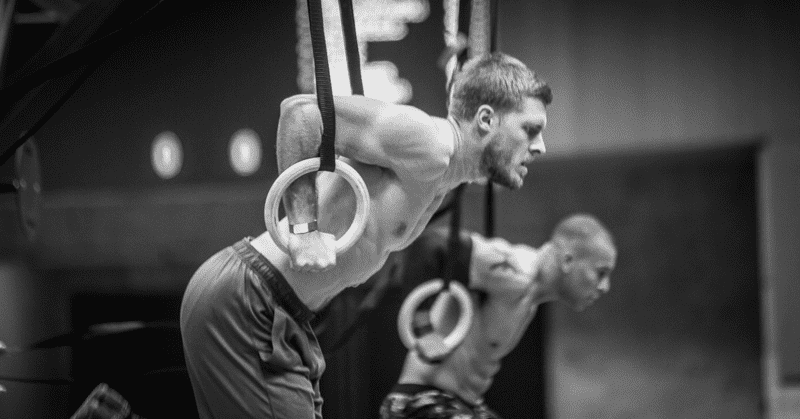
Muscle is not the only tissue that adapts. Tendons and ligaments also respond to training. Research shows that progressive loading increases tendon stiffness and strength. This improves force transmission and reduces injury risk. For ring training, this is crucial because:
- The rings create unpredictable forces
- The transition phase places stress on the elbows and shoulders
- Strong connective tissue improves control and safety
Adaptation takes time, but it happens consistently with proper training.
Bodyweight Training Improves Relative Strength
Bodyweight training is highly effective for improving relative strength. This is the ability to move your own body efficiently.
Studies show that bodyweight exercises can produce significant gains in strength, power, and muscular endurance.
For the muscle up, relative strength is everything. The stronger you are relative to your body weight, the easier the movement becomes.
You Can Scale the Movement
One of the most encouraging aspects of the muscle up is that it can be scaled.
You can adjust difficulty using:
- Bands
- Lower rings
- Assisted jumps
- Partial range of motion
This aligns with the principle of progressive overload. You start where you are and gradually increase difficulty. This means anyone can begin training toward a muscle up, regardless of their current level.
Practical Takeaway
Your body is not working against you. It is built to adapt to exactly this kind of challenge.
How to Start Working Toward Your First Ring Muscle Up
Now that you understand why the muscle up is achievable, here is how to apply that knowledge.
Build the Foundation
Focus on:
- Strict pull ups
- Ring rows
- Ring dips
- Support holds
Train these consistently with good form.
Practice the Skill
Include:
- False grip hangs
- Transition drills
- Band assisted muscle ups
- Negative muscle ups
Skill work should be frequent but controlled.
Progress Gradually
Increase difficulty over time:
- Reduce band assistance
- Increase range of motion
- Add tempo control
Avoid rushing the process.
Stay Consistent
Consistency is the most important factor. Research consistently shows that long term adherence is the key to strength and skill development. Train regularly, recover properly, and track your progress.
Final Thoughts
The ring muscle up is not reserved for elite athletes. It is a trainable skill built on strength, technique, and adaptation. You can get a ring muscle up because:
- The required strength is achievable
- The technique can be learned and refined
- Your body is designed to adapt to this type of movement
If you approach it with patience and structure, the muscle up becomes a realistic goal rather than an impossible one.
References
- Andersen, L.L. and Aagaard, P. (2006) Influence of maximal muscle strength and intrinsic muscle contractile properties on contractile rate of force development, European Journal of Applied Physiology, 96(1), pp. 46 to 52.
- Behm, D.G. and Anderson, K. (2006) The role of instability with resistance training, Journal of Strength and Conditioning Research, 20(3), pp. 716 to 722.
- Enoka, R.M. (1997) Neural adaptations with chronic physical activity, Journal of Biomechanics, 30(5), pp. 447 to 455.
- Komi, P.V. (2000) Stretch shortening cycle: a powerful model to study normal and fatigued muscle, Journal of Biomechanics, 33(10), pp. 1197 to 1206.
- Kraemer, W.J. and Ratamess, N.A. (2004) Fundamentals of resistance training: progression and exercise prescription, Medicine and Science in Sports and Exercise, 36(4), pp. 674 to 688.
- Latella, C. et al. (2016) Mechanical and morphological adaptations of the human Achilles tendon to resistance training, Journal of Applied Physiology, 121(1), pp. 33 to 43.
- Schoenfeld, B.J. (2010) The mechanisms of muscle hypertrophy and their application to resistance training, Journal of Strength and Conditioning Research, 24(10), pp. 2857 to 2872.