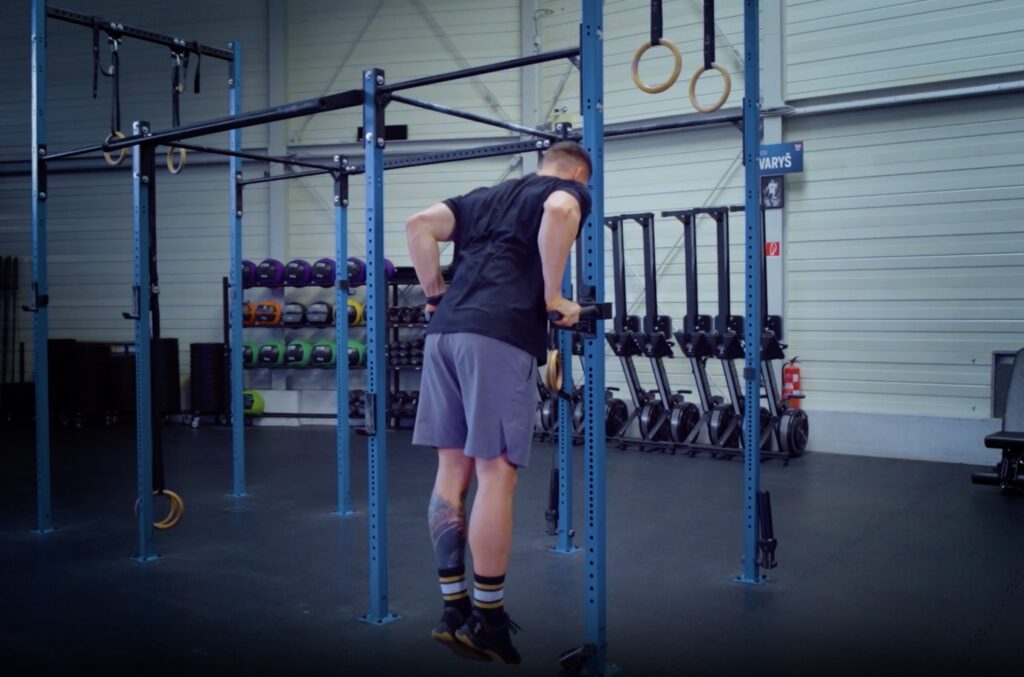
Many people assume that building muscle requires a commercial gym packed with machines and heavy barbells. While gyms offer convenience and variety, they are not a requirement for muscle growth. Scientific research consistently shows that muscles respond to mechanical tension, sufficient training volume, proper nutrition, and recovery, regardless of where you train.
Bodyweight exercises, resistance bands, backpacks filled with books, water jugs, and even your own furniture can become highly effective training tools when used correctly. The principles that drive hypertrophy remain exactly the same whether you are training in a gym or in your living room.


If you want to gain muscle at home, the good news is that the evidence is on your side. Here are the ten most important strategies you need to know.
Understand What Actually Builds Muscle
Muscle growth, also known as hypertrophy, happens when muscle protein synthesis exceeds muscle protein breakdown over time. Resistance training creates the stimulus, while nutrition and recovery allow the body to adapt.
Researchers identify mechanical tension as the primary driver of muscle growth. Metabolic stress and muscle damage may contribute, but they appear to play supporting roles rather than being the main reason muscles grow. This means your muscles do not know whether resistance comes from a fancy cable machine or a backpack loaded with books. They simply respond to challenging resistance that forces them to adapt.

The key is making each exercise difficult enough to recruit a high number of muscle fibers while gradually increasing the challenge over weeks and months.
Tip 1. Train Close to Failure
Effort Matters More Than Equipment
One of the biggest misconceptions about home training is that bodyweight exercises are too easy to build muscle. The reality is that almost any exercise can stimulate hypertrophy if performed close enough to muscular failure.
Studies comparing heavy and light loads have shown similar muscle growth when sets are taken close to failure. This means high repetition push ups, split squats, or resistance band rows can be just as effective as heavier gym exercises if they are challenging enough.
3 Best Six Pack Bodyweight Exercises for Men Aged 30+ that Want Great Abs
Stopping several repetitions before failure often reduces muscle fiber recruitment, especially during lighter resistance exercises. Pushing each working set until only one or two repetitions remain in reserve maximizes the training stimulus without requiring complete exhaustion every time.
Tip 2. Use Progressive Overload
Always Make Training Harder
Muscles only grow when they are given a reason to adapt. Performing the same workout every week with the same effort eventually leads to a plateau. Progressive overload means gradually increasing the demands placed on your muscles.
Without gym equipment, overload can still be achieved in many ways. You can increase repetitions, perform more sets, slow the lowering phase of each repetition, shorten rest periods, use harder exercise variations, or add external weight with household objects.
For example, once regular push ups become easy, progress to decline push ups, diamond push ups, archer push ups, or weighted push ups using a backpack. Each progression provides a stronger stimulus while following the same fundamental movement pattern.
Tip 3. Train Every Major Muscle Group
Build a Balanced Physique
Many home workouts focus almost entirely on push ups and abdominal exercises. Unfortunately, this neglects several major muscle groups that contribute to overall strength, posture, and athletic performance.
An effective muscle building program should include exercises for the chest, shoulders, back, arms, legs, and core.
Push ups target the chest, shoulders, and triceps. Rows performed with resistance bands, towels, or sturdy tables develop the back and biceps. Squats, split squats, lunges, and step ups effectively train the lower body. Glute bridges strengthen the hips, while planks and hanging leg raises challenge the core.
Training every muscle group also reduces muscular imbalances that can increase injury risk over time.
Tip 4. Train Each Muscle Twice Per Week
Frequency Supports Growth
Training frequency has been widely studied over the past decade. Current evidence suggests that training each muscle group at least twice weekly produces slightly greater hypertrophy than training it only once, provided total weekly training volume remains similar.
This does not mean you need to work out every day.
A simple upper body and lower body split performed four days each week or a full body routine completed three times weekly provides enough frequency for excellent results.
More frequent training also allows you to distribute volume across multiple sessions, reducing excessive fatigue while maintaining high quality repetitions.
Tip 5. Get Enough Protein

Nutrition Builds Muscle
Resistance training provides the stimulus, but dietary protein supplies the amino acids needed to repair and build muscle tissue. Current research suggests that individuals aiming to maximize muscle growth benefit from consuming approximately 1.6 to 2.2 grams of protein per kilogram of body weight each day.
Excellent protein sources include lean meat, poultry, fish, eggs, dairy products, soy foods, beans, lentils, and high quality protein supplements when necessary.
Spreading protein intake across three to five meals each day may further support muscle protein synthesis compared with consuming most daily protein in a single meal. Without sufficient protein, even the best training program cannot maximize muscle growth.
Tip 6. Eat Enough Calories

Fuel Muscle Growth
Building muscle requires energy. While beginners and individuals with higher body fat levels may gain muscle during a calorie deficit, most people experience better long term muscle growth while eating at maintenance calories or in a modest calorie surplus.
A surplus of approximately 200 to 300 calories each day is often enough to support muscle gain while limiting unnecessary fat accumulation. Food quality still matters. Whole grains, fruits, vegetables, healthy fats, and minimally processed protein sources provide vitamins, minerals, and fiber that support overall health and recovery.
Rapid weight gain caused by excessive calorie intake generally results in more fat gain than additional muscle.
Tip 7. Prioritize Sleep and Recovery
Muscles Grow Between Workouts
Training creates the stimulus, but recovery allows adaptation. Sleep plays a central role in muscle protein synthesis, hormone regulation, immune function, and athletic performance. Chronic sleep restriction has been shown to reduce recovery, impair strength gains, and negatively affect body composition. Most adults should aim for seven to nine hours of quality sleep every night.
Recovery also involves managing training volume. More is not always better. Performing excessive daily workouts without adequate rest may slow progress instead of accelerating it.
Taking at least one or two recovery days each week allows muscles to repair and become stronger.
Tip 8. Increase Time Under Tension
Make Light Weights Feel Heavy
Limited equipment does not mean limited muscle growth. Slowing the lowering phase of each repetition increases the amount of time muscles remain under tension. Pausing at difficult positions also increases muscular effort.
For example, lowering yourself over three to four seconds during a push up creates considerably more muscular tension than simply dropping quickly toward the floor. Similarly, performing squats with controlled movement and brief pauses near the bottom increases difficulty without requiring additional external resistance.
While excessively slow repetitions are generally unnecessary, controlled tempo can be a valuable tool when training at home.
Tip 9. Do Enough Weekly Training Volume
Volume Drives Hypertrophy
Research consistently identifies weekly training volume as one of the strongest predictors of muscle growth. Most people appear to benefit from performing approximately ten to twenty challenging sets per muscle group each week. Beginners often grow well at the lower end of this range, while experienced trainees may require more volume to continue progressing.
The important point is that these sets should be challenging. Ten easy sets performed with minimal effort are unlikely to produce meaningful muscle gains.
Tracking your workouts allows you to gradually increase training volume as your fitness improves while avoiding unnecessary overtraining.
Tip 10. Stay Consistent for Months, Not Days

Long Term Progress Wins
Muscle growth happens surprisingly slowly. Even under ideal conditions, beginners may gain around one to two pounds of muscle each month, while experienced lifters generally gain much more slowly. This makes consistency the single most important factor for long term success. Following a well designed home workout three or four times every week for an entire year will produce dramatically better results than completing intense workouts for only a few weeks before quitting.
Tracking progress with photos, body measurements, strength improvements, and exercise performance provides better feedback than relying entirely on the bathroom scale.
Final Thoughts
Building muscle without a gym is not only possible, but it is supported by decades of scientific research. Your muscles respond to challenging resistance, progressive overload, sufficient protein, adequate calories, and proper recovery. None of these require expensive equipment or a gym membership.
By training close to failure, progressively increasing the difficulty of your workouts, eating enough protein, recovering properly, and staying consistent over the long term, you can build impressive muscle almost anywhere.
The most effective training program is the one you can follow consistently. Whether your gym is a spare bedroom, a garage, a park, or your living room, the science shows that results come from applying proven principles rather than relying on specific equipment.
Key Takeaways
| Tip | Why It Matters |
|---|---|
| Train close to failure | Maximizes muscle fiber recruitment even with light resistance. |
| Use progressive overload | Muscles grow only when training becomes progressively more challenging. |
| Train every muscle group | Promotes balanced development and reduces muscular imbalances. |
| Train each muscle twice weekly | Supports greater muscle growth through increased training frequency. |
| Eat enough protein | Supplies amino acids needed for muscle repair and growth. |
| Maintain adequate calories | Provides energy to support hypertrophy and recovery. |
| Prioritize sleep | Optimizes muscle protein synthesis, recovery, and performance. |
| Increase time under tension | Makes bodyweight exercises more challenging without extra equipment. |
| Perform enough weekly sets | Higher training volume within recommended ranges supports hypertrophy. |
| Stay consistent | Long term adherence produces the greatest muscle gains. |
References
- American College of Sports Medicine. (2009) ‘Progression models in resistance training for healthy adults.’ Medicine & Science in Sports & Exercise, 41(3), pp. 687 to 708.
- Areta, J.L., Burke, L.M., Ross, M.L., Camera, D.M., West, D.W., Broad, E.M., Jeacocke, N.A., Moore, D.R., Stellingwerff, T., Phillips, S.M. and Coffey, V.G. (2013) ‘Timing and distribution of protein ingestion during prolonged recovery from resistance exercise alters myofibrillar protein synthesis.’ Journal of Physiology, 591(9), pp. 2319 to 2331.
- Grgic, J., Schoenfeld, B.J., Orazem, J. and Sabol, F. (2022) ‘Effects of resistance training performed to repetition failure or non failure on muscular strength and hypertrophy.’ Scandinavian Journal of Medicine & Science in Sports, 32(11), pp. 1833 to 1848.
- Morton, R.W., Murphy, K.T., McKellar, S.R., Schoenfeld, B.J., Henselmans, M., Helms, E., Aragon, A.A., Devries, M.C., Banfield, L., Krieger, J.W. and Phillips, S.M. (2018) ‘A systematic review, meta analysis and meta regression of the effect of protein supplementation on resistance training induced gains in muscle mass and strength in healthy adults.’ British Journal of Sports Medicine, 52(6), pp. 376 to 384.
- Phillips, S.M. and Winett, R.A. (2010) ‘Uncomplicated resistance training and health related outcomes.’ Current Sports Medicine Reports, 9(4), pp. 208 to 213.
- Schoenfeld, B.J. (2010) ‘The mechanisms of muscle hypertrophy and their application to resistance training.’ Journal of Strength and Conditioning Research, 24(10), pp. 2857 to 2872.
- Schoenfeld, B.J. (2019) ‘The science and development of muscle hypertrophy.’ Human Kinetics.
- Schoenfeld, B.J., Ogborn, D. and Krieger, J.W. (2016) ‘Effects of resistance training frequency on measures of muscle hypertrophy. A systematic review and meta analysis.’ Sports Medicine, 46(11), pp. 1689 to 1697.