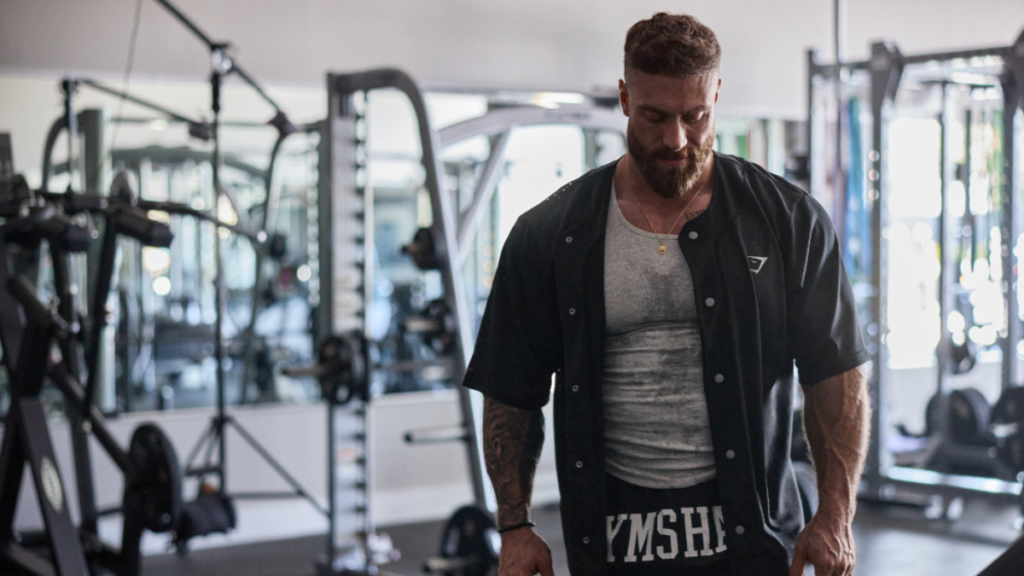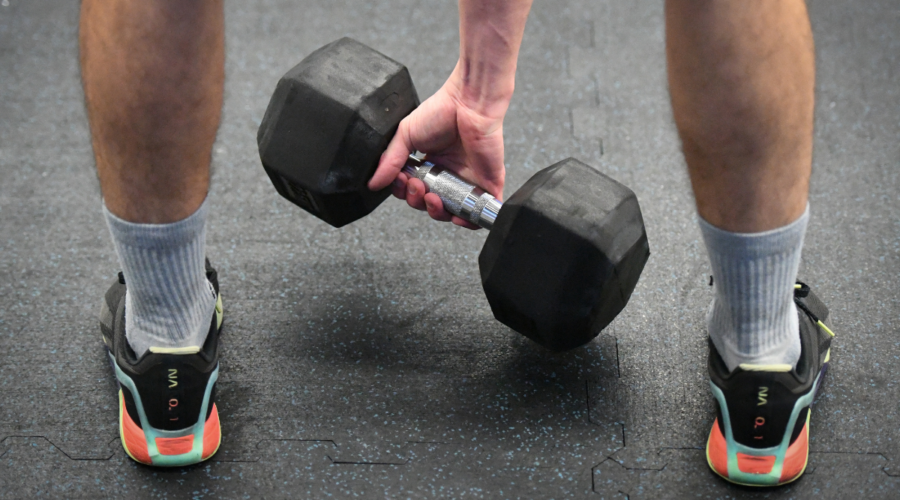


An attractive upper body is not built by chasing one muscle in isolation. It comes from developing a balanced frame with fuller shoulders, a visible chest, strong arms, and enough upper back muscle to create width and improve posture. Dumbbells are an excellent tool for this goal because they let each arm work independently, provide a natural range of motion, and can be used effectively at home or in a busy gym.
You do not need an enormous exercise list to make progress. A small number of well chosen movements, performed consistently and progressed over time, can stimulate substantial muscle growth. Research shows that resistance training supports hypertrophy across a wide range of loading schemes when sets are performed with sufficient effort. What matters most is accumulating challenging, high quality work and allowing your body time to recover and adapt.


The three dumbbell exercises below cover the muscles that make the biggest visual difference to your upper body. Together, they train the chest, shoulders, upper back, biceps, and triceps while also improving the strength needed for better posture and athletic performance.
What Makes an Upper Body Look More Muscular?
A visually impressive upper body usually has a clear shoulder to waist contrast. Broad deltoids and a developed upper back make the torso appear wider, while chest and arm development add thickness from the front and side. This is why simply doing more biceps curls rarely produces the complete result that many people want.
The deltoids are particularly important because they sit at the widest point of the upper body. Building the side and rear portions of the shoulders can make your frame look broader without changing your waistline. The upper chest also contributes to a powerful appearance because it fills the area beneath the collarbones and improves the shape of the torso in fitted clothing.
Upper back development should not be ignored. Strong lats, rhomboids, and middle trapezius muscles support shoulder position and create a more balanced physique from every angle. Resistance training can improve muscular strength, lean mass, and physical function, especially when exercises are performed consistently with enough weekly volume.
The best dumbbell routine is therefore not about finding one magical exercise. It is about selecting movements that train several important muscle groups efficiently and then making them progressively harder over time.
1. Dumbbell Incline Press
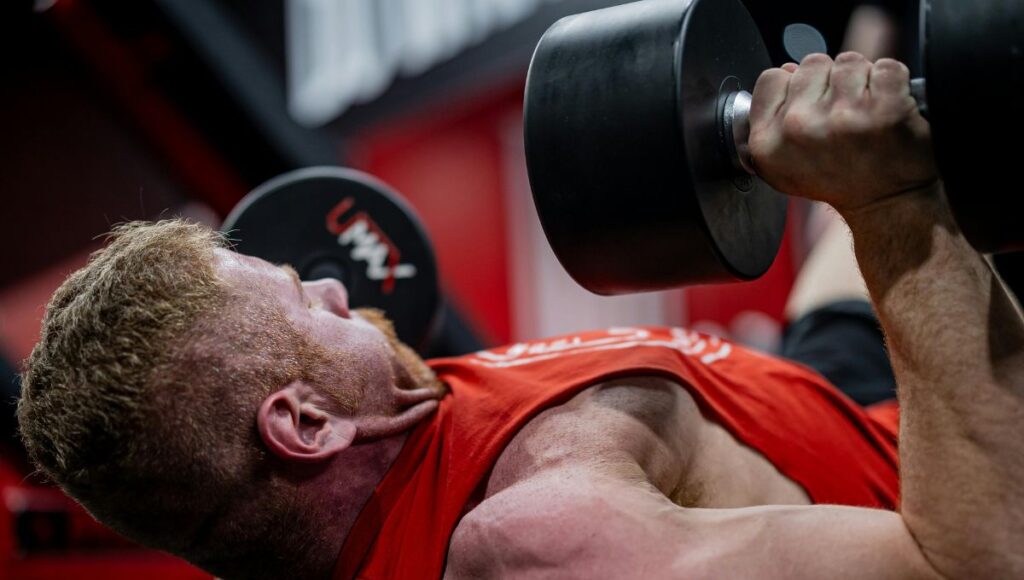
The dumbbell incline press is one of the most effective upper body exercises because it develops the chest, front shoulders, and triceps in one movement. It is especially useful for people who want a fuller upper chest and stronger pressing muscles without relying on a barbell.
Why the Dumbbell Incline Press Works
The pectoralis major is a large chest muscle with fibers that run in different directions. Pressing on an incline shifts more emphasis toward the upper portion of the chest, while the anterior deltoids and triceps assist as you press the weights away from your body. This makes the movement highly efficient when your goal is to build visible upper body muscle with limited equipment.
Dumbbells provide an advantage because each arm must control its own load. This can reduce the tendency for the stronger side to take over, which sometimes happens with a barbell. Dumbbells also allow you to use a comfortable grip and pressing path that suits your shoulder structure.
The incline does not need to be steep. A moderate bench angle is often enough to target the upper chest while keeping the movement from becoming overly shoulder dominant. If your bench is set too high, the exercise becomes closer to a shoulder press and reduces the chest stimulus.
How to Perform It
Set an adjustable bench to a moderate incline. Sit with the dumbbells resting on your thighs, then lean back and bring the weights to chest level. Keep your feet firmly on the floor, your upper back in contact with the bench, and your shoulder blades gently pulled back.
3 Best Beginner Cable Exercises For More Muscular Arms
Start with the dumbbells slightly outside your upper chest. Press them upward and inward until your arms are nearly straight, but do not forcefully lock the elbows. Lower the weights under control until you feel a comfortable stretch through the chest. Keep your wrists stacked above your elbows and avoid allowing the shoulders to roll forward at the bottom.
A controlled lowering phase is valuable because muscle growth depends partly on creating tension through a full and repeatable range of motion. You do not need to lower the dumbbells painfully far. The best depth is the one that gives your chest a stretch while allowing you to keep stable shoulder positioning.
How to Use It for Muscle Growth
Perform three to four hard sets of six to 12 repetitions. Choose a weight that allows you to finish your set with good form while feeling that you could perform only one to three more repetitions. Rest for at least one to two minutes between sets so you can maintain performance.
When you can complete the top end of your repetition target with clean technique, increase the load slightly. If you only have a limited selection of dumbbells, add repetitions, slow the lowering phase, or add an additional set before trying more advanced methods.
2. Dumbbell Row
The dumbbell row builds the upper back, lats, rear shoulders, and biceps. It is essential for creating a wider, more athletic looking torso and balancing the pressing movements that train the chest and front shoulders.
Why the Dumbbell Row Works
Many people who want a bigger upper body focus heavily on pressing. This can lead to a physique that looks incomplete from the side and back, while also neglecting muscles that help maintain good shoulder mechanics. Rows train the muscles that pull the upper arm toward the body and draw the shoulder blades back.
The latissimus dorsi contributes strongly to the appearance of upper body width. The rhomboids and middle trapezius add thickness around the upper back, while the rear deltoids help create a rounded shoulder shape. Your biceps also work hard during rows, giving you useful arm training without needing to devote all your effort to curls.
Single arm dumbbell rows are particularly practical because they allow a substantial range of motion and make it easier to focus on one side at a time. They also let you adjust your torso angle and elbow path to find the variation that feels strongest and most comfortable.
How to Perform It
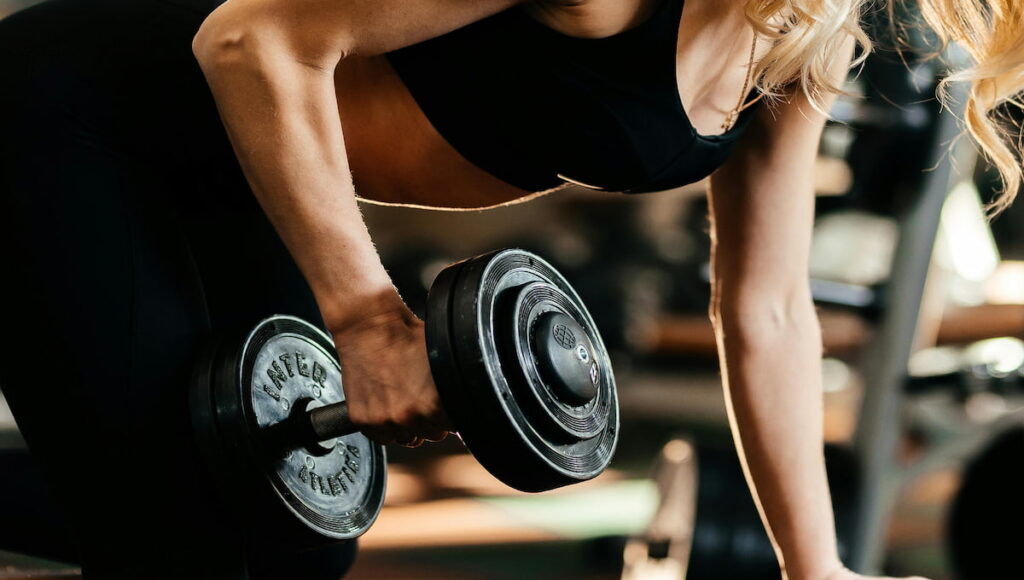
Place one hand and the same side knee on a bench. Put the opposite foot firmly on the floor and hold a dumbbell in your free hand. Your torso should be stable and roughly parallel to the floor, with your spine in a neutral position.
Let the dumbbell hang beneath your shoulder. Pull it toward the side of your rib cage by driving your elbow back. Think about moving your elbow rather than simply curling the weight with your hand. Pause briefly when the dumbbell reaches the top, then lower it slowly until your arm is fully extended.
Avoid twisting your torso aggressively to lift a heavier dumbbell. Some natural movement is normal, but the goal is to make the back muscles do the work. If your hips and shoulders are rotating excessively, reduce the load and regain control.
How to Use It for Muscle Growth
Perform three to five sets of eight to 15 repetitions on each side. Use a slightly higher repetition range than the incline press if that helps you maintain a strong contraction and smooth control.
A useful cue is to pull the dumbbell toward your hip for more lat involvement, or toward the lower ribs for a greater emphasis on the upper back. Both variations are valuable. You can alternate them over different training blocks or simply choose the version that lets you feel the target muscles working most clearly.
Rows also complement pressing movements by building the muscles that support your shoulder blades. A balanced training plan should include at least as much pulling volume as pressing volume, and many lifters benefit from doing slightly more pulling work than pressing work.
3. Dumbbell Lateral Raise
The dumbbell lateral raise is the most direct exercise for building the side deltoids. These muscles are a major contributor to shoulder width and can dramatically improve the visual shape of your upper body.
Why the Dumbbell Lateral Raise Works
Compound pressing exercises train the front shoulders very effectively, but they do not always provide enough direct work for the side deltoids. The lateral raise addresses this gap by training shoulder abduction, which is the action of lifting the arm out to the side.
The side deltoids are relatively small muscles, so they do not require extremely heavy weights to grow. In fact, using loads that are too heavy often causes the traps, lower back, and momentum to take over. Moderate to light dumbbells, controlled repetitions, and consistent effort are usually more productive.
Direct work for the side deltoids is especially valuable for people who want their upper body to look wider. More developed side delts create a stronger shoulder line and improve the illusion of a narrower waist. This effect is one reason lateral raises remain a staple in physique focused training programs.
How to Perform It
Stand tall with a dumbbell in each hand and your arms by your sides. Keep a soft bend in your elbows and position the dumbbells slightly in front of your thighs rather than directly beside them.
Raise your arms outward and slightly forward until the dumbbells reach approximately shoulder height. Your hands should move in a smooth arc. Pause briefly, then lower the dumbbells slowly without relaxing completely at the bottom.
Keep your neck relaxed and avoid shrugging your shoulders toward your ears. If you feel the exercise mainly in your upper traps, reduce the weight and focus on leading with your elbows. You should feel the side of the shoulder doing most of the work.
How to Use It for Muscle Growth
Perform three to five sets of 12 to 20 repetitions. The final repetitions should be demanding, but you should still be able to control the weights without swinging.
Because lateral raises use a smaller muscle group, shorter rest periods can work well. Rest for around 60 to 90 seconds, then repeat. Training close to muscular failure can be useful for this exercise because it is difficult to use very heavy loads safely and because lighter loads can still produce a meaningful hypertrophy stimulus when effort is high.
If your dumbbells are too heavy for strict lateral raises, perform one arm at a time while lightly holding a stable object with your free hand. This gives you more control and can help you maintain better form.
How to Combine These Exercises Into a Complete Workout
You can use these three movements as a simple upper body session two or three times per week. Start with the dumbbell incline press while you are fresh, then move to the dumbbell row, and finish with lateral raises.
For most people, two sessions per week is enough to create progress if the sets are challenging and nutrition supports the goal. Three weekly sessions may be useful if you recover well and can maintain strong form. Give the same muscle groups at least a day between hard sessions so they can recover.
Muscle growth is supported by enough total training volume, progressive overload, protein intake, sleep, and consistency. You do not need to destroy yourself every workout. You need to complete enough hard, productive sets over many weeks and months.
Aim to improve something gradually. That may mean adding a repetition, using a slightly heavier dumbbell, improving your range of motion, or making the same weight feel more controlled. Small improvements accumulate into meaningful changes in strength and muscle size.
The Biggest Mistakes to Avoid
The first mistake is trying to lift too heavy before your technique is stable. Heavy dumbbells can be useful, but only when you can control them through the intended range of motion. If every repetition becomes a full body swing, the target muscles receive less tension and your injury risk rises.
The second mistake is only training the muscles you can see in the mirror. Chest, front shoulders, and biceps are important, but rows are essential for a balanced physique and resilient shoulders. A strong upper back improves how you look from behind and supports your pressing strength.
The third mistake is changing exercises constantly. Variety can be enjoyable, but muscle growth requires enough repeated exposure to a movement for you to become stronger at it. Keep these exercises in your plan for several weeks, record your sets and repetitions, and give yourself time to improve.
Finally, do not underestimate recovery. Resistance training creates the stimulus, but your body needs adequate calories, protein, and sleep to adapt. Consistency with a good plan will always outperform occasional workouts that are exhausting but poorly structured.
Final Thoughts
If you want a more attractive upper body using only dumbbells, focus on exercises that create visible width, thickness, and balance. The dumbbell incline press develops the chest, shoulders, and triceps. The dumbbell row builds the upper back, lats, and biceps. The lateral raise directly targets the side deltoids that make your frame look broader.
Train these movements with controlled technique, take your working sets close to fatigue, and find ways to progress over time. You do not need a complicated routine or a room full of machines. A pair of dumbbells, a bench if available, and consistent effort can be enough to build an upper body that looks stronger, wider, and more athletic.
Key Takeaways
| Focus | What to Do | Why It Matters |
|---|---|---|
| Upper chest and pressing strength | Use the dumbbell incline press for three to four sets of six to 12 repetitions | It trains the chest, front shoulders, and triceps in one effective movement |
| Upper back width and balance | Perform dumbbell rows for three to five sets of eight to 15 repetitions per side | It develops the lats, upper back, rear shoulders, and biceps |
| Broader shoulders | Add dumbbell lateral raises for three to five sets of 12 to 20 repetitions | Direct side delt training helps create a wider looking upper body |
| Progression | Add repetitions, load, control, or sets gradually | Progressive overload supports long term strength and muscle gains |
| Recovery | Train the session two or three times weekly and support it with protein and sleep | Muscle growth depends on training quality, recovery, and consistency |
References
- American College of Sports Medicine (2009) ‘American College of Sports Medicine position stand: Progression models in resistance training for healthy adults’, Medicine and Science in Sports and Exercise, 41(3), pp. 687–708.
- Grgic, J., Schoenfeld, B.J., Skrepnik, M., Davies, T.B. and Mikulic, P. (2018) ‘Effects of rest interval duration in resistance training on measures of muscular strength: A systematic review’, Sports Medicine, 48(1), pp. 137–151.
- Krieger, J.W. (2010) ‘Single versus multiple sets of resistance exercise for muscle hypertrophy: A meta analysis’, Journal of Strength and Conditioning Research, 24(4), pp. 1150–1159.
- Morton, R.W., Murphy, K.T., McKellar, S.R. et al. (2018) ‘A systematic review, meta analysis and meta regression of the effect of protein supplementation on resistance training induced gains in muscle mass and strength in healthy adults’, British Journal of Sports Medicine, 52(6), pp. 376–384.
- Schoenfeld, B.J., Grgic, J., Ogborn, D. and Krieger, J.W. (2017) ‘Strength and hypertrophy adaptations between low versus high load resistance training: A systematic review and meta analysis’, Journal of Strength and Conditioning Research, 31(12), pp. 3508–3523.
- Schoenfeld, B.J., Ogborn, D. and Krieger, J.W. (2016) ‘Effects of resistance training frequency on measures of muscle hypertrophy: A systematic review and meta analysis’, Sports Medicine, 46(11), pp. 1689–1697.
- Schoenfeld, B.J., Ogborn, D. and Krieger, J.W. (2017) ‘Dose response relationship between weekly resistance training volume and increases in muscle mass: A systematic review and meta analysis’, Journal of Sports Sciences, 35(11), pp. 1073–1082.
- Simao, R., Spineti, J., Salles, B.F. et al. (2012) ‘Influence of exercise order on maximum strength and muscle thickness in untrained men’, Journal of Sports Science and Medicine, 11(2), pp. 224–230.